Clarence Guarantees the Highest Level of Cloud Sovereignty in Europe

Thanks to a fully isolated (air-gapped) architecture, Clarence ensures complete sovereignty over data, infrastructure, and operations.

Discover


Security & Sovereignty

Without any external connectivity or extraterritorial exposure, the platform provides a fully secure environment for the most critical use cases, including artificial intelligence.

At the European sovereignty scale, Clarence reaches the highest level—and is the only operational solution to achieve it.

A native sovereignty, designed for the most demanding environments.

Data Sovereignty and Full Control

  • Majority government ownership: 60% Luxembourg State (via LuxConnect), 21.4% Belgian State (via public participation in Proximus Luxembourg)
  • Exclusively Luxembourg-based management
  • Exclusive control: no third-party access
  • No exposure to the U.S. Cloud Act

Complete Isolation for Unmatched Cloud Security

  • Air-gapped solution: no internet connection, no external connectivity
  • Data and infrastructure physically and logically isolated
  • Hosted in Tier IV government data centers in Luxembourg
  • Strict compliance: NIST SP 800-53 – FedRAMP
  • Sovereign operations under majority public governance
  • ISO 27001 certified system

The 6 Foundations of the Clarence Sovereign Cloud

1.

Infrastructure Capacity

A scalable, high-performance infrastructure designed for critical environments.

2.

Data Residency in Luxembourg

Data storage and processing exclusively located in Luxembourg.

3.

Guaranteed Data Sovereignty

No extraterritorial exposure, ensured by a fully Luxembourg-based legal framework.

4.

Absolute Digital Sovereignty

Full control over both software and hardware layers.

5.

Operational Sovereignty

Complete visibility and control over operations, all conducted in Luxembourg.

6.

Autonomy and Resilience

Continuous service and workload continuity even in the event of major international crises, with no dependency on external events or decisions.

Security by Design: Clarence’s Zero Trust Strategy

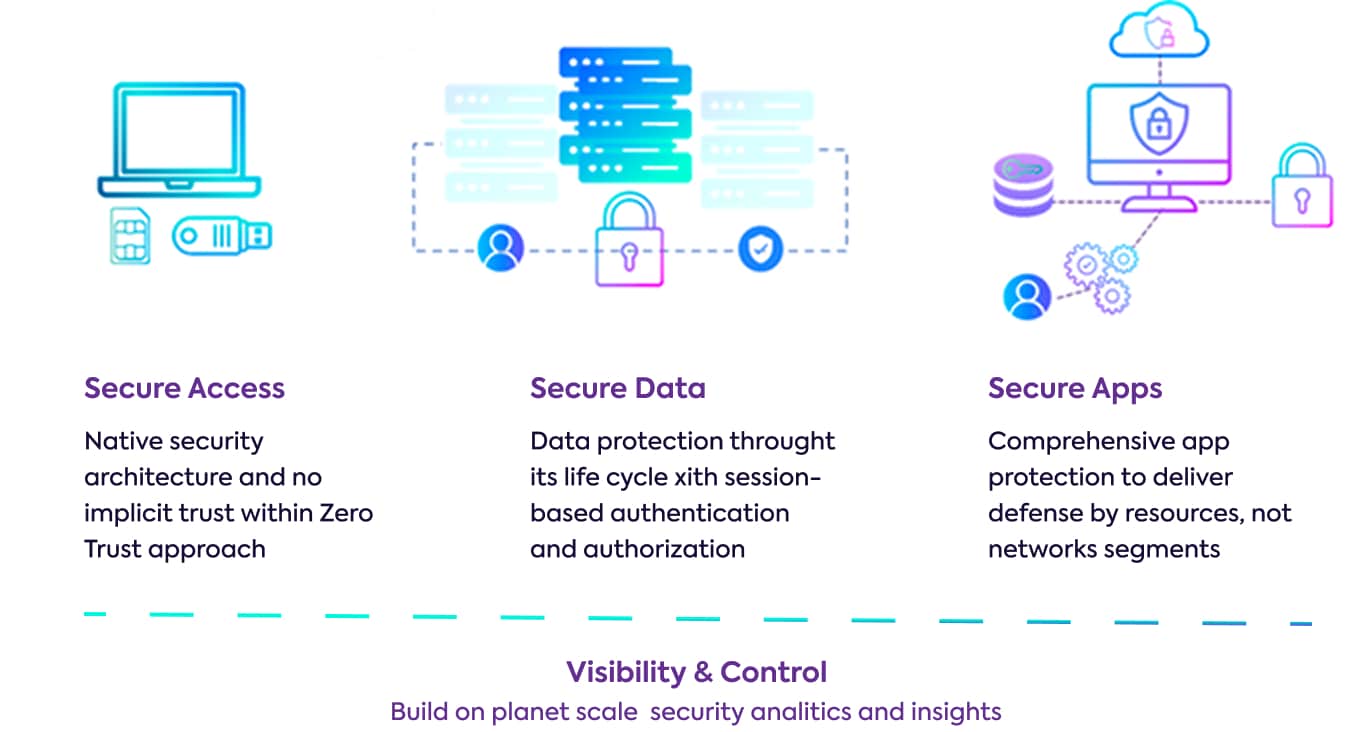
In a context where threats are constantly evolving, the Zero Trust model has become a fundamental security approach. Based on the principle of “never trust, always verify,” it ensures that every user, device, and application is systematically authenticated and validated, regardless of location. This approach significantly reduces risks while providing continuous protection for data and critical systems.

Clarence integrates a native Zero Trust strategy:

  • Strict segmentation
  • Granular access management
  • Full logging and auditing
  • Continuous monitoring
  • Multiple layers of encryption
  • Data protection “at rest, in transit, and in use”

Security is structural, not optional.

Internationally Recognized Cloud Security Standards

Clarence relies on a robust set of international standards and certifications to ensure optimal levels of security, compliance, and resilience. From FedRAMP to ISO 27001, including NIST and ANSSI frameworks, it adopts a multi-standard approach tailored to critical environments.

Clarence services are ISO 27001 certified.

Sovereign and Quantum-Safe Connectivity from Luxembourg

Sovereignty extends to connectivity beyond national borders. Through dedicated, secure, and post-quantum–resilient interconnections, Clarence ensures sovereign connectivity between Luxembourg, the BENELUX region, and other international environments, in partnership with Proximus NXT IT.

  • Dedicated and isolated lines, deployable internationally
  • End-to-end security across all interconnections
  • No exposure to the public internet
  • Advanced protection against post-quantum era risks
  • End-to-end PQC (post-quantum cryptography) algorithms, complementing the sovereignty of the Clarence infrastructure in Luxembourg

A sovereign connectivity model, including at international scale.

Why Digital Sovereignty Has Become Essential

European organizations must regain control over their critical data.

To learn more on our solution

Contact
our experts

    * Required fields